

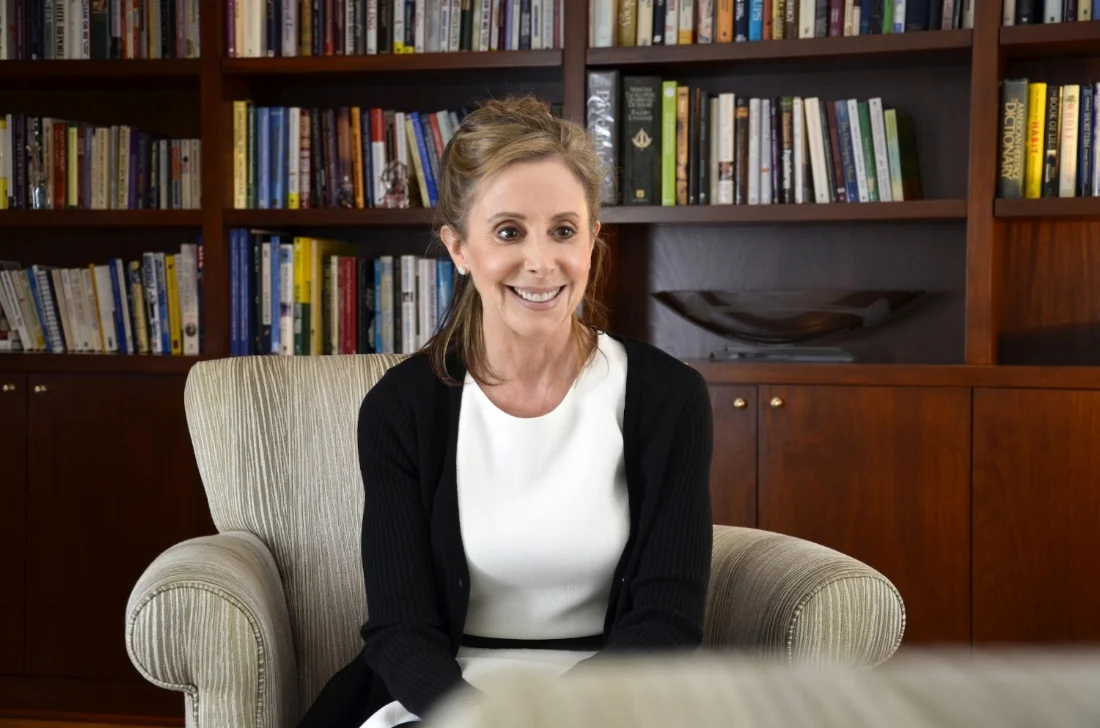
Why waste any more time? Life is precious.
I am a licensed clinical psychologist with over 25 years of clinical experience specializing in the rapid resolution of psychological symptoms. Often referred to as the best psychologist in Los Angeles, if you are looking for excellence and discretion, you have come to the right place.
In addition to private consulting, I hold an appointment as a clinical assistant professor in the Department of Psychiatry and Biobehavioral Sciences at the David Geffen School of Medicine at UCLA and have been rated as one of UCLA's best voluntary clinical professors.
Current Professional Work
Clinical Pursuits
I maintain a private consulting practice in Los Angeles, California where I consult with individuals and couples via weekly or monthly appointments. I also provide remote consulting for out-of-town clients.
My work with clients has always been active and focused; based on full collaboration with the goal of removing distressing symptoms and helping people regain or achieve their highest level of functioning as quickly as possible.
Specializations, Advanced Degrees, Certificates, and Areas of Focus
My teaching and consulting has been informed by the many different therapeutic modalities I trained in which I combine when curating healing or consulting plans for each individual client. Among my scholarly pursuits, I have studied and obtained advanced training in Attachment-Based Intensive Short-Term Dynamic Psychotherapy, Accelerated Experiential Dynamic Psychotherapy, Attachment Therapy, EMDR, Emotionally Focused Therapy, EFT Couples Therapy, Gottman Couples Therapy, Grief Recovery (w/ GRI certification), Interpersonal Neurobiology, ISTDP, Mindfulness-Based Stress Reduction, Sensorimotor Psychotherapy, and Sex Therapy.
My work with clients focuses on removing obstacles to the buried emotions and experiences or memories that are driving the current or chronic symptoms and issues. The surface issues rarely tell us the whole story about the origin or source of suffering or stuckness. Just as anxiety can operate as a “signal” or symptom of a problem which serves to block access to the complex emotions driving it, I guide clients to the unconscious engine of their symptoms. We address and reduce surface anxiety so we can get beyond it and other presenting symptoms, issues, or blockages to access the source, facilitate healing, and achieve fulfillment of each client’s potential (freeing the mind of being held captive by suffering or paralysis and taking active steps to prevent recurrence).
Teaching
Based on my love of teaching, I have committed substantial time and energey to supervising, lecturing, and conducting clinical training groups for mental health professionals, in the US and abroad, who wish to achieve more success with clients or learn Intensive Short-term Dynamic Psychotherapy (ISTDP). I founded and teach a 1-2 year course on ISTDP and Accelerated Psychotherapy for UCLA psychiatry residents and faculty at UCLA’s David Geffen School of Medicine.
My passion for teaching is irrepressible and resulted in my being honored with the Distinguished Teaching Award by the UCLA Department of Psychiatry and Biobehavioral Sciences for my “Outstanding Clinical Faculty Teaching” at the David Geffen School of Medicine.

Educational and Professional Training
I obtained my undergraduate degree from the University of California at Berkeley where I was a University Merit Scholar and a recipient of the Presidential Undergraduate Fellowship. I subsequently earned a Master’s degree and Doctorate in Clinical Psychology and Organizational Behavior from the University of California, Los Angeles (UCLA). My post-degree professional training includes over 25 years of clinical experience.
I have specialized in Attachment-Based ISTDP and empirically validated, solution-focused therapies for over twenty-five years. I have pursued advanced training in many accelerated models of attachment-based individual, couples and sex psychotherapy, grief recovery, executive coaching, organizational behavior, interpersonal neurobiology, trauma treatment, emotion regulation, anger management, and mindful parenting. I have studied or taught alongside talented scholars, clinicians, and executive coaches including: Allan Abbass, Walter Brackelmanns, Andrew Christensen, Samuel Culbert, Habib Davanloo, Michele Weiner-Davis, Diana Fosha, Jon Frederickson, Joshua Golden, John Gottman, Josette ten Have-de Labije, Sue Johnson, Mary Main, Robert Neborsky, Pat Ogden, Allan Schore, Daniel J. Siegel, Marion Solomon, Stan Tatkin, and Bob Tannenbaum.
Additionally, I remain a scholar of Human Sexuality and the ways in which people can use sex or work or other activities to avoid intimacy. I taught and trained at UC Berkeley’s and UCLA’s Human Sexuality Programs. At UCLA, I worked with Drs. Joe & Peggy Golden and Dr. Lee Blackwell in the Human Sexuality Program at UCLA’s Neuropsychiatric Institute to help couples having difficulty sustaining emotionally and sexually intimate relationships. Specifically, I provided relationship therapy and sex therapy to couples who sought out our help to resolve their relationship problems which were frequently exacerbated by sexual acting out (one or both partners having affairs, abusing pornography, or avoiding sexual engagement). In addition to treating sexual dysfunction, I became skilled in helping individuals and couples notice and eliminate relationship-destructive behaviors, resolve relationship trauma, take ownership of their authentic feelings and desires, however controversial, and increase the overall quality of their most intimate and important relationships.

Human Sexuality is Complicated. Our upbringing and culture affects our ideas about sex, our ways of expressing our sexuality, our feelings about our desirability, and the freedom we feel to enjoy our sexuality.
Photo by Toa Heftiba on Unsplash
“Dr. Robin Kay has been an advocate for emancipating men from the shackles of traditional male gender role expectations (e.g., be strong, never cry, hide your feelings, tough it out…). To paraphrase renowned author, men’s psychological health advocate, and masterful psychotherapist Terrence Real, “men’s willingness to downplay weakness and pain has been named a factor in their shorter life span. The (average) ten year longevity difference between men and women turns out to have little to do with genes. Men typically wait longer to acknowledge that they are sick, take longer to get help, and once they get treatment, they do not comply with it as well as women do.” It is emcumbent upon us as an evolved society to make optimizing male mental health a priority, to improve relationship quality, allow men to shine as parents, and decrease violence nationwide. (Photo below by Ian Stauffer on Unsplash)

(PSY12661)